Showing posts with label car articel. Show all posts

Sunday, June 21, 2009

Lorinser Lexus LS460


Eating “Spätzle” or “Maultaschen” with chopsticks? Unthinkable! The Swabian art of tuning, on the other hand, suits Japanese car building perfectly, as the latest design from Sportservice Lorinser proves. For the first time the designers, who normally make extravagant tailor-made clothing for Mercedes vehicles, ventured to work on an Asian.

The Lexus LS460 is a dynamic vehicle - after all, this five-metre flagship has a floor area equivalentto six Tatami mats and thereby as much as an average Japanese room. Thanks to a refined aerodynamic package from Sportservice Lorinser, the elegant bodywork exudes confidence.
The front apron with the spoiler gives the countenance elegant corners and edges and together with the round fog lights makes it a face in the crowd. On the sides the LS460 shows its muscles thanks to the Lorinser side sills: with dynamic verve they go directly back into the door joint.

The expressive rear is as far from insignificant thinking as the Lorinser company headquarters are from Fujiyama. All the components however, show the bold harmonic understanding of the designer. Emphasis is placed on the one hand on the decent Lorinser rear wing on the boot lid, and on the other hand the hot-blooded rear apron. This does not just accommodate an arched air inlet with a sporty race grill, but also two characteristic double exhaust end tips, which sparkle aggressively in the sun. And the heavy cavalry at the other end of the exhaust unit is ready to go at any time. The V8 has 381 horsepower (280 kW) at its command, which catapults the car from 0 to 100 in 5.7 seconds. All in all it’s a harmonious recipe, which receives its crowning jewel in the form of the attractive light-alloy wheels from Lorinser. More creations should soon follow Lorinser’s first Lexus menu. At the on-site restaurant Mille Miglia, however, guests need not worry about having to eat “Spätzle” with chopsticks in the future.

2009 Lorinser Lexus LS460

Saturday, June 20, 2009

Seat Ibiza Bocanegra


More details, and confirmed prices, for SEAT’s forthcoming trio of scorching Ibiza hot hatches are revealed today.

The fire-breathing threesome, which are all available to order now with deliveries beginning on 1 October, bring innovative new technology to the sporting supermini segment for the very first time with RRPs starting at just £14,995.

Showcasing SEAT’s engineering prowess, while taking the brand’s sporty design to new heights with the concept car-inspired Bocanegra, the newcomers are poised to inject a serious dose of Latin passion into the compact hot hatch class.

At the heart of all three of these Spanish fliers is SEAT’s mould-breaking new 1.4-litre TSI twin-charged petrol engine which is set up to deliver a potent 150 PS in the FR, and a downright fiery 180 PS in the range-topping Cupra and Bocanegra.

In either state of tune, the four cylinder 1.4-litre TSI uses state-of-the-art supercharging and turbocharging to reach its remarkable peak power outputs, with both forms of forced induction contributing to the engine’s enviably linear power delivery and commendably flat torque curve.

The new FR’s 150 PS version, for instance, provides its 220 Nm maximum pulling power at just 1,250 rpm and continues that right through to 4,500 rpm. Allied as it is to a new, second generation, seven-speed DSG gearbox the engine can propel the lowered, stiffened Ibiza FR from rest to 62 mph in as little as 7.7 seconds and on to a top speed, where legal, that’s comfortably on the exciting side of 130 mph.

Steering wheel-mounted F1-style shift paddles allow the driver to wring every ounce of excitement out of the new, dual dry clutch, Direct-Shift Gearbox which, aside from allowing swifter gear changes than are humanly possible with a conventional ‘box, also improves fuel economy when compared with a standard manual transmission.

Provisional figures show the Ibiza FR’s combined fuel economy stands at 44.8 mpg, while CO2 emissions are put at just 146 g/km.

Predictably, it’s a similar story with the new Ibiza Cupra and Ibiza Bocanegra. Upping the output from the twin-charged 1.4 TSI to 180 PS, while employing the same cutting edge DSG transmission technology and clever XDS ‘electronic differential’ as the FR, this brace of exciting hot hatches is capable of yet more impressive performance.

Both Cupra and Bocanegra will hit 62 mph from rest in a frenetic 7.2 seconds before pressing on, where legal, to a top speed of 140 mph.

Fuel economy for the 180 PS cars is no less impressive, considering the significant performance on offer. Both are provisionally put at 44.1 mpg on the combined cycle, with only fractionally higher CO2 stats than the Ibiza FR at 148 g/km.

All three cars come with a welter of suitably sporty styling features inside and out: unique front and rear bumpers (subtly different on all three models); arch-filling 17-inch alloys of various designs; sports seats and bespoke sports-orientated interior styling are just a few of the things that leave no one in any doubt these are no ‘ordinary’ Ibizas.

When it comes to out-and-out kerb appeal, though, it’s the flagship Ibiza Bocanegra that takes the honours. This exclusively-styled version of the Ibiza Cupra is the work of SEAT design chief Luc Donckerwolke, and brings his 2008 Geneva Motor Show concept car to the road.

Bocanegra (Spanish for ‘black mouth’ – since you ask) draws its styling inspiration from a classic 1970s SEAT which first coined the nickname as a result of its striking black front grille and bumper.

Today’s Bocanegra is no less striking, with a black mask-like effect that gives this model its special personality. Double headlights look like two prominent eyes on the face of the mask, which peer out from a completely black casing. Black also dominates the central grille and its surround, with its spectacular honeycomb mesh, which perfectly coordinates with the innovative air vents beneath.

The middle portion of the bumper is also black, as is the broad lower grille, the latter’s size allowing ample engine cooling. Built-in fog lights are flanked by side air vents finished in black trim to round off the spectacular front end.

There are also black inserts in the lower middle portion of the Bocanegra’s rear, surrounding the prominent, centrally-mounted, trapezoidal exhaust.

Confirmed RRPs for all three models, are:

Model
Engine
Recommended Retail Price

SEAT Ibiza FR
1.4 TSI 150 PS DSG
£14,995

SEAT Ibiza Cupra
1.4 TSI 180 PS DSG
£15,995

SEAT Ibiza Bocanegra
1.4 TSI 180 PS DSG
£16,695


SEAT UK Ibiza Product Manager, Andy McGregor, said of the trio of range-toppers: ‘The imminent arrival of such a technologically advanced selection of performance hatches is what many Ibiza enthusiasts have been waiting for.

‘The appeal of TSI twin-charger engineering together with, as standard, our brilliant new DSG ‘box – plus the standard fitting of XDS advanced traction control – takes these Ibizas to the top of their class.

‘Adding the striking visual appeal of the Bocanegra means buyers who want the ‘ultimate’ Ibiza should look no further.’

Seat Ibiza Bocanegra


Renault Megane Sport Tourer


Unveiled earlier this year as one of six world debuts at the Geneva motor show, New Mégane Sport Tourer now becomes the tenth new Renault model this year as part of the company’s extensive range renewal programme.

Priced from £15,485 to £22,785, the new load-carrier is certain to shake-up the class, with an attractive combination of eye-catching looks, low-emission ‘eco²’ engines, impressive equipment levels and prices starting around £300 less than several of its rivals.

Compared to the entry-level versions of two of its principal rivals, Ford Focus Estate Studio 1.6 100 at £15,795, and the Vauxhall Astra Estate Life 1.4i 16V 90 at £15,790, the New Mégane Sport Tourer Expression 1.6 100 is more competitive by over £300. In the case of the Astra, Renault’s new entrant also has a more powerful engine.

Similar to the recently launched New Scénic range, several new engines and transmissions appear in the Mégane Sport Tourer range for the first time. With four in total, they are the 1.4 TCe (Turbo Control Efficiency) 130, 2.0 VVT 140 CVT (Continuously Variable Transmission), 2.0 dCi 160 FAP and 2.0 TCe 180.

New Mégane Sport Tourer and Renault eco²

Keeping pace with the Renault eco² programme, the New Mégane Sport Tourer range follows its Clio, Kangoo and Scénic siblings by offering several new eco² branded versions, with some of the lowest CO2 emissions in the class.

Both versions of the award-winning 1.5 dCi engine (86 and 106hp) emit 120 grams per kilometre or less in the estate version of Renault’s best-selling model. The 1.5 dCi 86 Expression produces only 118 grams. Versions with the 1.9 dCi 130 are also eligible. Two eco² models feature in each trim level, giving a total of eight affordable and low emission choices across the range.
New Mégane Sport Tourer – technology built-in
Just like the Clio and Scénic ranges, the Sport Tourer also benefits from the new integrated Carminat TomTom®,

The new system offers a wealth of intrinsic benefits, such as:

user-friendly and ready-to-run as soon as the car is started
very competitive pricing (£450)
easy to read: large 5.8-inch (14.7cm) colour screen integrated in the dashboard. 3D bird view or 2D road-map display, with manual and automatic zoom
reliable navigation incorporating traffic information and alternative routes, speed camera locations, speed limits, a large number of points of interest and a wide range of customisable functions
In addition to the fact that they offer greater protection against theft, integrated systems continue to stand out as the safest option in an accident. They are easy to read, too, thanks in this case to a 5.8-inch (14.7cm) colour screen which is positioned high up on the dashboard to minimise the time the driver’s eyes are off the road. The availability of 2D and 3D ‘bird view’ displays – with or without automatic zoom – make itineraries easy to follow.

The screen itself doubles up as a central multimedia display, including the automatic display of data and information concerning the radio, telephone address books (when combined with Bluetooth®), and MP3 player music playlists (albums and song titles) when employed with the TunePoint function.

Vocal navigation instructions are transmitted via the vehicle’s own loudspeakers which are in turn controlled by the steering wheel-mounted fingertip remote control. Carminat TomTom® comes with a remote control function (or joystick, depending on vehicle) for quick, safe use.

Carminat TomTom®, updatable and customisable

Carminat TomTom® is easy to update. Maps are stored on a 2GB SD card. By using the card on a computer linked to the internet, customers can access a long list of on-line services. It is then easy to:

update and upgrade the navigation system thanks to free or payable downloads: maps, speed camera locations, points of interest, customisation of certain functions (voice, 3D vehicle icon, colours, etc.)
order maps of other countries on-line (2GB SD cards can also be purchased)
share, correct and save map information using MapShare®
pre-trip planning with Google search®
obtain e-guides, tuition, etc.
For those owners whose computer does not have an SD card function, a USB-type SD reader can be ordered separately.

New Mégane Sport Tourer - range structure

The range starts with Expression, at £15,485. Key features on this entry-level version include 4×15W RDS radio CD, air conditioning, front and rear curtain airbags, ESP, folding front passenger seat, front and rear electric windows, keyless car with Renault card and longitudinal roof bars.

Higher up the range, Dynamique boasts core equipment such as 16” alloys wheels, automatic lights and wipers, Bluetooth and MP3 connection, Hands free Renault card and leather steering wheel.

Like New Clio and Scénic, a new TomTom Edition appears in the New Mégane Sport Tourer line-up. Based on Dynamique, it offers Carminat TomTom for an additional £360, rather than the £450 cost of it as an option.

Completing the range, flagship Privilège trim provides luxurious family motoring, adding Dual-Zone climate control, electric folding mirrors, electrochrome rear view mirror and rear armrest with storage.

Like all Renaults, a series of options are available for customising Mégane Sport Tourer models to specific tastes. Among them are:

£300 17” alloy wheels
£350 Arkamys 3D Sound 4×15W RDS radio CD with Bluetooth and multi-functional TunePoint
£150 Automatic parking brake
£400 Dual Zone climate control
£450 Carminat TomTom ®
£900 Leather upholstery
£395 Metallic paint
£400 Parking proximity sensors – front and rear
£600 Sunroof – electric panoramic
To enhance the already svelte lines of the latest addition to the New Mégane range, a Style Pack is available on Expression versions at £380, offering 16” Spirale alloy wheels and front fog lights.
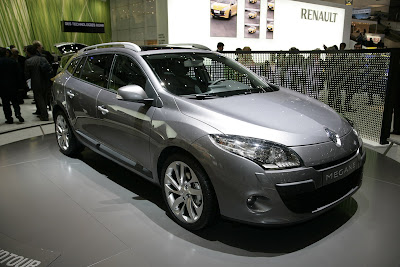
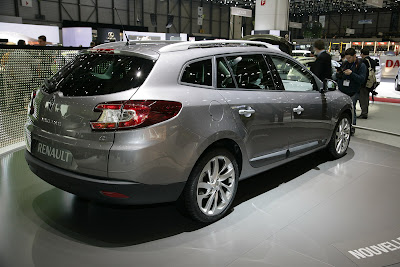
2009 Renault Megane Sport Tourer

NISMO Nissan 370Z Price


Nissan North America, Inc. (NNA) announced pricing for the all-new 2009 Nissan NISMO 370Z™, which goes on sale today at Nissan retailers nationwide. The new, second-generation NISMO Z® continues the tradition of the original, offering unique performance and design attributes that true sports car enthusiasts are looking for – including a functional aerodynamic body design, 18 additional horsepower and a special sport-tuned suspension.

The 2009 Nissan NISMO 370Z™, which is equipped with a 350-horsepower 3.7-liter V6 and close-ratio 6-speed manual transmission with SynchroRev Match, has a Manufacturer’s Suggested Retail Price* (MSRP) of US $39,130. Only three accessories are available on this well equipped vehicle – NISMO carpeted floor mats, illuminated kick plates and a carpeted trunk mat.

“The new NISMO Z® is a tuner and Z® enthusiast’s dream – straight from the factory,” said Pat Steiner, Director, Specialty Vehicles, Nissan Division, NNA. “With its dramatic exterior, custom interior, sport-tuned performance and under $40,000 price, this new NISMO Z® is possibly the best ‘bang-for-the-buck’ sports car available today.”

About the 2009 NISMO 370Z™
The NISMO 370Z™ was developed by Nissan’s Specialty Vehicles Group in conjunction with Autech Japan, Nissan’s longstanding conversion partner. The NISMO Z®’s standard 3.7-liter DOHC V6 engine with Variable Valve Event and Lift Control (VVEL) develops 350 horsepower and 276 lb-ft of torque (versus the standard 370Z Coupe’s 332 horsepower and 270 lb-ft of torque), thanks in part to an exclusive free flow dual exhaust system, muffler tuning and an optimized Engine Control Module.

As expected of a true performance machine, the NISMO 370Z™ is offered with only one transmission – a close-ratio 6-speed manual transmission with standard SynchroRev Match-the world’s first synchronized downshift rev matching manual transmission introduced earlier this year on 370Z Coupe (which simulates perfectly matched heel-toe-like downshifting).

The NISMO 370Z™ also features a refined 4-wheel independent suspension, a reinforced strut tower brace for enhanced body rigidity and a pair of performance body dampers to manage road-input vibrations and help contribute to the NISMO 370Z™’s stability and performance feel. The NISMO-tuned suspension includes specially tuned springs, shock absorbers and stabilizer bars. Wider, unique 5-spoke 19-inch RAYS forged aluminum-alloy wheels are mounted with Yokohama ADVAN Sport Y-rated high-performance tires. Nissan Sport Brakes and a Viscous Limited-Slip Differential are also standard on the NISMO 370Z™.

Along with its standout performance, the new NISMO Z® stands out from the crowd with its dramatic performance-oriented exterior and interior styling. The functional and fully integrated aerodynamic body modifications include an extended nose with a canard design at each corner for improved downforce and a fully integrated chin spoiler. Special side sills and a unique rear fascia help manage airflow under the vehicle, while the functional rear spoiler also increases downforce.

The interior includes NISMO logo seats with black and red fabric and red stitching, a NISMO tachometer, a smooth leather-wrapped steering wheel with red parallel stitching, a smooth leather-wrapped shift knob and aluminum trimmed pedals. A serialized plaque of authenticity is also matched to each NISMO Z®, identifying its unique serial and model year designation.

2009 Nissan NISMO 370Z Pricing

Description MSRP*
370Z Coupe NISMO – 3.7 Liter V6 6 M/T $39,130

Port Installed Accessories MSRP*
NISMO Carpeted Floor Mats $115
Illuminated Kick Plates $200
Carpeted Trunk Mat $95


NISMO Nissan 370Z
NISMO Nissan 370Z


NISMO Nissan 370Z
NISMO Nissan 370Z

Mercedes C-Class Special Edition


For lovers of exclusive cars Mercedes-Benz is proud to announce the arrival of an eye-catching new version of the C-Class on the scene. The new Special Edition is set to draw admiring glances with its sporty, elegant design features, reserved for this model only, a high-quality interior plus some exciting technical highlights as part of the standard specification, including AGILITY CONTROL, ADAPTIVE BRAKE, BlueEFFICIENCY and the Intelligent Light System, ensuring that even the most discerning requirements are met for those looking for refinement, motoring pleasure and a car with a distinctive character. The Special Edition is available as a saloon and an estate and with all the C-Class engines.

Sporty passion, exciting dynamism and effortlessly superior style – these are the distinguishing characteristics of the new Mercedes-Benz C-Class Special Edition. The striking C-Class design that has won a number of awards has now been given an even finer, and yet at the same time more sporty, air by Mercedes-Benz through the addition of some charismatic details. Playing a major role in the vehicle’s image are its darkened front headlamps with a dark cover frame, the new indium grey paintwork (obsidian black, palladium silver, iridium silver or calcite white are also available) and 17-inch 5-spoke light-alloy wheels with mixed-size tyres (235/60 R 17 at the front, 255/55 R 17 at the rear). As an alternative there are also 16-inch 7-spoke light-alloy wheels and 205/55 R17-size tyres all round.

The optical finesse of the exterior comes courtesy of touches such as shoulderline trim strips in polished aluminium, the finned radiator in brilliant silver matt with chrome highlights and an integrated star, front fog lamps with a chrome ring and chromed twin louvres, chrome highlights in the bumper, rub strip and boot lid plus the B-pillar trim painted glossy black.

Like the exterior, the interior is based on the AVANTGARDE design and equipment line. Its aesthetics have been streamlined and its sportiness sharpened through the inclusion of further high-quality materials and carefully coordinated details. An example of these stylish elements are the seats – exclusively manufactured for the Special Edition – made from black ARTICO man-made leather with Liverpool fabric in como beige. There is contrasting topstitching in comobeige embellishing the seats, centre armrest, door centre panel and floor mats, serving to underline the dynamic theme. The floor mats also bear the “Special Edition” lettering. Leather seats are available as an optional extra – also in two-tone variants featuring black/sahara beige or black/cognac brown.

Trim parts in brushed aluminium which have been designed exclusively for this C-Class Special Edition contrast with the interior in black and beige, creating an ambience full of soul. The standard specification includes armrests with a double cup holder and a stowage compartment at the front and rear, 1/3 : 2/3 folding rear seats with a through-loading feature, a luxury multifunction leather steering wheel with a 4.5 inch display in the instrument cluster that boasts three analogue round dials with tapered tube-style surrounds, not to mention a shift/selector lever in leather, plus seat heating.

The range of equipment includes some superb technical innovations such as AGILITY CONTROL, ADAPTIVE BRAKE and BlueEFFICIENCY, helping the C-Class to set standards in the compact premium-car segment. Also part of the standard specification on board the Special Edition is the Intelligent Light System featuring bi-xenon headlamps with variable light distribution, an active light function, dynamic headlamp range control plus a cornering light function that ensures optimum adaptation to the current visibility. Yet more comfort is afforded by PARKTRONIC with its acoustic and optical distance warning.

The new Mercedes-Benz C-Class Special Edition is available now in both saloon and estate guise with the entire engine line-up, including the redeveloped, especially powerful four-cylinder diesel engines which come complete with the assurance of their exemplary thriftiness and environmental compatibility. Indeed, it is thanks to them that Mercedes-Benz has achieved model status in this class where efficiency is concerned.

Depending on which engine is ordered, the additional charge on the respective AVANTGARDE model in conjunction with the fabric/ARTICO man-made leather upholstery is between 2,689.40 and 3,879.40 euros (between 4,629.10 and 5819.10 euros in conjunction with leather upholstery) including German VAT.

2009 Mercedes C-Class Special Edition


2009 Mercedes C-Class Special Edition

The Ferrari 599, 612 and 430 have had offspring. The open two-seater, dubbed the California Spider, with its retractable aluminum hard top is the new entry level model among the sports car offerings from Maranello. Having been introduced to the world at the Paris Motor Show last October, the California Spider can now be admired on our roads, too.

For those who wish to further personalize the appearance and performance of this exceptional sports car, edo competition is now offering very special accessories.

Newly-developed wheel/tire sets in 20 and 21 inches are guaranteed to draw amazed looks from passers- by. The wheels are available in several attractive designs. Customers can also opt for a lowered ride height or the addition of a sport suspension system. The sport suspension is adjustable in both compression and rebound damping, allowing for a custom tailored ride for cruising, spirited driving, or competition.

To make sure the performance of a vehicle as special as the California is up to par in all aspects, edo competition also offers custom ECU recalibration. After reprogramming the production ECU, the 8-cylinder engine now generates 367 kW (500HP) and 369 ft-lb of torque at 5,200 rpm. In addition to the recalibrated electronics edo competition can install a newly-developed high performance exhaust system featuring adjustable butterfly valves and custom designed high flow catalytic converters with a 200 cell per square inch metal core.

This well-matched combination enables the engine to develop its new-found power in an impressive manner. The treatment also provides a torque increase that is particularly noticeable in everyday driving. As a result, the performance figures of the edo California Spider are improved as well: It can accelerate from 0 to 100 km/h (62 mph) in a phenomenal 3.9 seconds and the top speed is an impressive 315 km/h (196 mph).

As with all edo competition models, we set no limit to our customers’ imaginations. Special interiors or lavish leather upholstery, individual requests are accommodated and executed with quality.

2009 Edo Competition Ferrari California


2009 Edo Competition Ferrari California

Fiat Bravo MSN Edition


A combination of beauty and functionality, shape and content, exclusive Italian style matched with technological innovation: this is the special edition Bravo MSN Edition, the latest addition to the Fiat medium-sized car family which has proven extremely popular among the public in Italy and marks a further chapter in the collaboration between two industrial leader like Microsoft and Fiat Group Automobiles. Over the last few years, this collaboration has led to the launch of Blue&Me (a device which allows you to listen to music on several types of MP3 players, to phone hands free, to scroll down names in your phonebook and receive text messages, all with Bluetooth without ever taking your hands off the wheel or your eyes off the road) as well as Eco:Drive, which analyses your driving style to improve it and reduce fuel consumption and CO2 emissions. From today – with the contribution of Magneti Marelli, another company that excels in automotive technology – the Bravo MSN Edition is also available with the new on-board Instant Nav which combines a satellite navigator with maps on SD Card, a radio, a CD player and an Mp3 player, integrated with Blue&Me, in a single device (exact and quickly updated) built into the dashboard.

The Bravo MSN Edition is presented to the public with an original and innovative initiative, reflecting the original and innovative nature of the entire car. Crews comprising of both people who regularly use MSN and opinion leaders will be leaving on board a handful of Bravo MSN Edition cars from the capitals of the various European countries where the car will be on sale (Belgium, France, Germany, Italy, the Netherlands, Portugal, the United Kingdom and Spain) on 26th June. With the help of Eco:Drive installed standard on Bravo MSN Edition cars, the driving style of the various crews will be “monitored”. At the end of this European tour, which will be finishing at the Fiat Group Automobiles Test Centre in Balocco (VC), everyone will be given a cash prize and the team with the best eco index will be awarded a larger prize. All the money will go to charitable causes in the various countries. In Italy, it will be used to take part in the construction of a nursery school in Abruzzo.

You can follow the various stages of the journey as well as the conclusive ceremony to be held on 29th June in Balocco on the MSN website (which will feature exclusive footage and photos). What’s more, you can also book a test drive in the car on internet, to be taken at any Fiat dealer: the greater the number of test drives taken, the larger the contribution Fiat will make to the construction of the nursery school.

The Bravo MSN Edition is recognisable at first glance thanks to the MSN logo on the rear steering knuckles and the colour of the specific bodywork: Maranello Red, Maserati Blue and the new Tempesta Grey. Available with the last generation 1.6 Multijet 16v 120HP diesel engine equipped with a particulate filter that complies with the emission limits of the Euro 5 regulation, the new special edition offers those who get on board a world of technology to stay in touch with everyone all the time, even when you’re on the move. In addition to the Instant Nav radionavigation device and to the Blue&Me technology, the built-in TMC Premium function makes it possible to know the latest traffic information in real time as well as to find out alternative routes to reach the desired destination, making the Bravo MSN Edition a genuine “concentration” of digital technology.

What’s more, thanks to a special customised version “Bravo MSN Limited Edition” of the K770i Cyber-Shot mobile phone sold by Sony Ericsson, you merely need to press one key to enter the Microsoft instant messaging client Windows Life Messenger, currently the most popular instant messaging service in the world, allowing immediate contract between groups of people. Extremely popular among young people, it allows you to converse in real time with friends in the four corners of the globe, send files, share folders on your computer and work, just as though you were in the same room or office.

Audi A5 Sportback First Details


The brand with the four rings leads the pack with a new vehicle concept: The Audi A5 Sportback combines the best of different automotive worlds. It is as emotional and elegant as a coupe, as comfortable as a sedan, and as practical as an Avant. The Sportback joins the Coupé and Cabriolet as the third member of the A5 model family – and at the same time creates a new segment. With an exciting design, great everyday utility and highly efficient and powerful TFSI, FSI and TDI engines, the A5 Sportback will arrive at Audi dealerships in September. The car will be open for ordering with an entry price of EUR 36,050 for the 2.0 TDI version. A version with an even more attractive price will follow in the middle of 2010. This will make the A5 Sportback the entry model for the A5 model range.

The A5 Sportback represents a milestone in car design. The five-door coupe excels in its elegant, elongated, sporty profile. The large hatchback fits perfectly into the tail-end styling. The spoiler lip and the diffuser insert provide contrast and emphasize the athletic tautness of the elongated contour. The coupe-like silhouette is the result of a roof section with a long, tapering roofline that is moderately lower by 36 mm (1.42 inches) than the A4 Sedan and of the short overhangs at the front and rear as well as the long wheelbase of 2,810 mm (9.22 feet) and the four frameless doors with their slim, dynamic window styling. The unusual hatchback design is distinctively emblematic of the vehicle’s excellent functionality. With the Sportback, the designers of the Avant are setting trends in tail-end design while combining sportiness, comfort and utility in a completely new way.

The unique functional concept in conjunction with the emotion-packed design creates a cutting-edge mix of coupe and Avant. The baggage volume of 480 liters (17.0 cubic feet) nearly equals that of the A4 Avant, and it has an impressive 980 liters (34.6 cubic feet) with the rear seatbacks folded down.

The A5 Sportback provides a full measure of comfort on all four seats and convenient entry and exit through every door. Despite the fact that its exterior height is less than that of the A4 Sedan and that its roof tapers at the rear, the Sportback has comparable headroom and legroom.

The powerplant of the A5 Sportback is another advance along the path of innovative technologies Audi has been charting: All engines are of the direct injection type – the diesel versions are sophisticated common rail TDI units while the gasoline engines are based on the FSI concept. All engines meet the EU5 exhaust emission standard. The diesel versions are equipped with particulate filters.

Initially the A5 Sportback will be available with a choice of two gasoline and three diesel engines. The two gasoline versions, the 2.0 TFSI quattro with an output of 155 kW (211 hp) and 350 Nm (258 lb-ft) of torque and the 3.2-liter V6 quattro generating 195 kW (265 hp) are both equipped with the Audi valvelift system. This feature can produce more power and higher torque as well as lower fuel consumption.

The following engines are also available right from the start: the 2.0 TDI with 125 kW (170 hp), 350 Nm (258 lb-ft), a 6-speed manual gearbox and start/stop system, the 2.7 TDI with 140 kW (190 hp) and 400 Nm (295 lb-ft), and the three-liter V6 TDI with 176 kW (240 hp) plus an enormous 500 Nm (369 lb-ft) of maximum torque and quattro all-wheel drive.

The newly developed ESP control with electronic differential lock on the front axle ensures noticeably improved steering response as on the Coupé and Cabriolet and compensates effectively for change-of-load reactions - which increases driving safety.

The perfect addition to this technology package is the Audi drive select dynamic driving system – this allows the driver to choose between three different modes which influences the throttle response characteristics, the shift points for the seven-speed S tronic or multitronic transmissions, and supports the servotronic steering. If the vehicle is equipped with the MMI operating system, a fourth, freely programmable level is also available.

Audi drive select can only be ordered in conjunction with one or more of three additional technologies – adaptive shock absorber control, dynamic steering with continuously variable assistance and quattro with sport differential for the 3.0 TDI and 3.2 FSI versions.

Toyota IQ3 Official Revealed


Toyota’s iQ range is extended for the first time since launch with the introduction to the line-up of a 1.33-litre engine. The highly efficient lightweight unit, already successfully deployed in Auris, Yaris and Urban Cruiser is offered exclusively in the new iQ3 model.

Benefiting from Toyota Optimal Drive technology for a class-leading combination of power, fuel economy and low emissions, it uses Dual VVT-i control of both intake and exhaust valves to deliver strong torque at low to medium engine speeds and achieve maximum efficiency.

The headline figures broadcast the exceptional customer benefits in terms of running costs. With manual transmission, iQ3 returns an official 58.9mpg in combined cycle driving, and 113g/km of CO2 – Band B for road tax (£35 annual charge) – both of which are best-in-class figures. Equipped with Toyota’s new Multidrive CVT system, fuel economy is just as good, while emissions rise slightly to 120g/km, but remain within Band B.

This achievement is not at the expense of performance. The engine develops a maximum 98bhp at 6,000rpm and peak torque of 125Nm at 4,400rpm. Nought to 62mph can be achieved in 11.8 seconds (11.6 with Multidrive) and top speed is 106mph. This underlines the fact that iQ is more than just a city runabout, giving a strong, stable and enjoyable drive at motorway speeds.

Matched to a compact, lightweight six-speed manual gearbox, the engine features Toyota’s Stop & Start system. This automatically cuts the engine when the car comes to a stop and the gear shift is moved to neutral; when a gear is selected, the engine restarts quickly (in just 0.4 seconds) and seamlessly, thanks to the use of a permanently engaged gear mechanism. In urban driving – iQ’s natural environment – Stop & Start can yield fuel consumption savings of up to 15 per cent.

iQ3 is also available with Multidrive, Toyota’s new stepless CVT (continuously variable transmission).

One of the key elements of the 1.33-litre engine is its piston design. Smaller and lighter than on the previous 1.3 unit, they are designed with a smaller contact area and use carbon ceramide, an advanced material more commonly used in Formula One engineering, to reduce friction.

iQ3 carries forward the premium specification of iQ2 but with some additional, exclusive features: the door mirrors have chrome-finished housings and the car rides on larger, 16-inch dual five-spoke alloy wheels. The choice of six paint finishes includes Decuma Grey metallic, which is also exclusive to iQ3.

The standard equipment features include automatic headlights and wipers, climate control, electric folding and heated door mirrors, Smart Entry and Start, auto-dimming rear view mirror, six-speaker sound system, front fog lights and a leather trimmed steering wheel. Nine airbags are fitted, including the world’s first rear window airbag, and the active safety package includes Vehicle Stability Control (VSC) with Traction Control (TRC).

iQ3 is on sale now. On-the-road prices are £11,495 for the six-speed manual version and £12,495 with Multidrive.

iQ Accessory Packs and Options

Four themed accessory packs have been assembled for iQ, giving owners an easy way to give their car that something extra.

-Style (£295) adds chrome surrounds to the front fog lights, chrome side sills, a chrome strip on the tailgate and aluminium scuff plates.
-iUrban (£345) provides rear parking sensors, a reversible rubber/velour boot liner (for use when the rear seats are folded flat) and carpet mats.
-iSports (£495) focuses on style with a neat roof spoiler, deep rear skirt and inverted delta-shape chrome exhaust tailpipe finisher.
-iConnect (£375) keeps you in touch on the move with Bluetooth, plus the neat detachable Glovebag to store documents and small personal items.

With such a high standard specification on iQ3, there are just two extra-cost options: leather seat upholstery (£690) and a fully integrated satellite navigation system with Bluetooth and iPod integration (£930).

Ford Mustang Panoramic Glass Roof Edition


The 2010 Ford Glass Roof Mustang and Mustang GT convertible, which are arriving in dealerships now, offer consumers sun-soaked driving and top-rated safety heritage. Fans of open-air motoring have made the Mustang convertible a perennial bestseller. Those who love the sun but want to cut back on sunscreen use can choose the pony car with the panoramic glass roof, which filters nearly all of the sun's harmful rays.

-Panoramic glass used on the 2010 Ford Glass Roof Mustang filters almost all of the sun's harmful rays and reduces cool-down time and wind noise while offering a convertible-like driving experience
-Scientific studies show increased exposure to sunshine or bright light – like that provided in the convertible and Glass Roof Mustang – is therapeutic because it regulates the body's mood-regulating hormone and circadian cycle of sleep and wakefulness; also triggers a natural remedy for "the blues"
-Panoramic sunroofs have doubled in popularity during the past five years; tilt/slide type sunroofs will remain dominant, followed by panoramic and spoiler types through 2011
-The 2010 Mustang – including Glass Roof and convertible versions – builds on the safety success of the 2008 Mustang – the first sports car and first convertible to earn five-star ratings in U.S. government frontal crash, side impact and rollover tests

DETAILS:

The 2010 Mustang builds on the safety success of the 2008 Mustang, which became the first sports car and the first convertible to earn five-stars from the National Highway Traffic Safety Administration (NHTSA) for frontal crash, side impact and rollover tests.

The Mustang's considerable body stiffness contributes to its driving performance and has an added benefit in accident protection. While the coupe's body structure is 31 percent stiffer in torsional rigidity than its predecessor, the convertible's is more than twice as stiff – creating a "safety cage" that helps protect the cabin from deformation and intrusion during an impact.

The front structure is designed to absorb and help dissipate it before it can reach the passenger compartment. The Mustang's front rails have an octagonal shape designed to spread forces evenly at the firewall and progressively deform for increased protection in offset frontal crashes.

Protective sun-drenched driving

The 2010 Ford Glass Roof Mustang offers consumers convertible-like driving without the need for sunscreen, because its factory-installed panoramic glass roof filters 90 percent of the sun's heat-generating infrared (IR) rays and 96 percent of burn-causing ultraviolet (UV) rays.

The UV-filtering capability of the new Mustang's fixed glass roof is comparable to sunscreen lotion with a sun protection factor (SPF) of approximately 50, which exceeds the dermatologist-recommended sunscreen strength of at least SPF-15.

The glass roof's ability to filter IR rays reduces heat load in the cabin so that occupants remain comfortable while enjoying the sun. The reflective glass also reduces energy used by the vehicle's air conditioner system while protecting the interior fabric from fading and deteriorating.

Good for the soul

Sun-soaked cruising is the convertible and Glass Roof Mustang's top appeal factor. Scientific studies show that increased exposure to sunshine or bright light is therapeutic because it regulates the body's synthesis of melatonin, a mood-regulating hormone that modulates the circadian cycle of sleep and wakefulness. Sunshine also triggers the body's conversion to active vitamin D, considered to be an effective natural remedy for "the blues."

Health experts caution that cool breezes in convertibles can misleadingly mask the sun's harmful rays as occupants may not feel as hot as when they're stationary under the sun. Therefore, dermatologists recommend the use of sun-block lotion or moisturizer with a sun protection factor (SPF) of 15 or higher prior for top-down drives.

Roof glass popularity rising

According to J.D. Power feature content research, 62 percent of buyers in the sports car segment wanted a sunroof/moon roof on their next vehicle. Since its introduction in 2008, the Glass Roof Mustang – which is available as a $1,995 option on both the V-6 model and the GT – has accounted for 10 percent of all Mustang sales. The convertible accounts for 25 percent of Mustang sales, and sell most strongly in California, Florida, Texas and Georgia.

Mustang is just one Ford model that features ample sunlight and generous views. The 2010 Lincoln MKS and 2009 Ford Flex, Ford Edge and Lincoln MKX also offer sun-splashed driving enjoyment with an optional panoramic roof glass that is privacy tinted for the occupants' comfort and protection.

According to CSM Worldwide, over the last five years panoramic sunroofs have doubled in the popularity in North America. The installation of tilt/slide type sunroofs will remain dominant, followed by panoramic and spoiler types throughout 2011.

Chevrolet Corvette ZR1 Price


After taking on the world’s best supercars and proving a better value and performer by the global automotive press, the Corvette ZR1 returns for 2010 with new Performance Traction Rata PenuhManagement (PTM) technology. It is an advanced system that is part of a new Launch Control feature, which optimizes traction for greater and more consistent on-track performance.

The PTM system holds a predetermined engine speed while the driver pushes the throttle to the floor. That allows the driver to quickly release the clutch and the system modulates engine torque 100 times per second to maximize the available traction. The system is capable of approaching a skilled driver’s best effort and repeats it consistently.

PTM also integrates the ZR1’s traction control, active handling and selective ride control systems to enhance race track driving consistency and overall performance. When full throttle is applied upon exiting a corner, it automatically manages acceleration dynamics.

The new PTM technology is the newest element that affirms the Corvette ZR1 is an American supercar with the technology and engineering refinement to take on the world’s best – but at a much lower price.

The ZR1’s highlights include:

-LS9 supercharged 6.2L V-8 rated at 638 horsepower (476 kW), and 604 lb.-ft. of torque (819 Nm)
-Six-speed, close-ratio, race-proven manual transmission
-High-capacity dual-disc clutch
-Higher-capacity and specific-diameter axle half-shafts; enhanced torque tube
-Specific suspension tuning provides more than 1g cornering grip
-Twenty-spoke 19-inch front and 20-inch rear wheels
-Michelin Pilot Sport 2 tires – P285/30ZR19 in front and P335/25ZR20 in the rear – developed specifically for the ZR1
-Standard Brembo carbon-ceramic, drilled disc brake rotors – 15.5-inch-diameter (394-mm) in the front and 15-inch-diameter (380-mm) in the rear
-Blue-painted brake calipers
-Standard Magnetic Selective Ride Control with track-level suspension
-Wider, carbon-fiber front fenders with ZR1-specific dual ports
-Carbon-fiber hood with a raised, polycarbonate window – offering a view of the intercooler below it
-Carbon-fiber roof panel, roof bow, front fascia splitter and rocker moldings with clear-coated, visible carbon-fiber weave
-ZR1-specific full-width rear spoiler with raised outboard sections
-Specific gauge cluster with boost gauge (also displayed on the head-up display) and 220-mph (370 km/h) speedometer readout
-Curb weight of 3,333 pounds (1,512 kg).

The specialized components of the new ZR1 work harmoniously to deliver the most powerful and fastest automobile ever produced by General Motors. It has a top speed of 205 mph (330 km/h).

In addition to PTM, the following features are also new for 2010:

Standard launch control
Available Torch Red exterior color
Available Cashmere interior color
Available Competition Gray wheels.

Supercharged LS9 engine

The supercharged LS9 6.2L small-block engine is the power behind the ZR1’s performance. A sixth-generation Eaton supercharger helps the LS9 make big power and torque at lower rpm and carries it in a wide arc to 6,600 rpm, as it pushes enough air to help the engine maintain power through the upper levels of the rpm band – the area where supercharged performance tends to diminish. Heavy-duty and lightweight reciprocating components enable the engine’s confident high-rpm performance.

The Roots-type supercharger uses a unique, four-lobe rotor design. It is augmented with an integrated charge cooling system that reduces inlet air temperature for maximum performance.

The LS9 is hand-assembled at GM’s Performance Build Center in Wixom, Mich., and incorporates special processes typically seen in racing engines to produce a highly refined and precise product. For example, cast iron cylinder liners are inserted in the aluminum block and are finish-bored and honed with a deck plate installed. The deck plate simulates the pressure and minute dimensional variances applied to the block when the cylinder heads are installed. This ensures a higher degree of accuracy that promotes maximum cylinder head sealing, piston ring fit and overall engine performance.

Transmission and axle

The LS9 engine is backed by an upgraded, stronger six-speed manual transmission and a twin-disc clutch that provide exceptional clamping power, while maintaining an easy clutch pedal effort. ZR1-specific gearing in the transmission provides a steep first-gear ratio that helps launch the car, and top speed is achieved in sixth gear.

As the term implies, the twin-disc clutch system employs a pair of discs, which spreads out the engine’s torque load over a wider area. This enables tremendous clamping power when the clutch is engaged, while also helping to dissipate heat better and extend the life of the clutch.

The twin-disc clutch system also contributes to the ZR1’s exceptional driving quality, with smooth and easy shifting. The twin-disc system’s design allows higher torque capacity with inertia and pedal effort similar to the Corvette Z06. It enables a 25-percent reduction in inertia, thanks to smaller, 260-mm plates; the Corvette Z06’s uses a 290-mm single-disc system.

The rear axle also is stronger in the ZR1 and features asymmetrical axle-shaft diameters – 33 mm on the right side and 40 mm on the left – that were developed after careful testing to provide optimal torque management. The axles are mounted on a more horizontal plane that correlates with the wider width of the rear wheels and tires.

Ride and handling

The ZR1 is built on the same aluminum-intensive chassis as the Corvette Z06 and features similar independent SLA front and rear suspensions, with aluminum upper and lower control arms. Where the ZR1 differs is the suspension tuning, which was optimized for the car’s steamroller-wide front and rear tires.

Magnetic Selective Ride Control is standard and tuned specifically for the ZR1. The system’s ability to deliver a compliant ride with nearly instantaneous damping adjustments enabled engineers to develop a surprisingly supple ride quality in a supercar that still delivers cornering grip of more than 1g.

From a high-performance perspective, Magnetic Selective Ride Control helps the rear axle remain planted during launch for smooth, hop-free acceleration. It also helps suppress axle movement when cornering on broken or uneven pavement.

Brakes, wheels and tires

Commensurate with the ZR1’s engine output is the braking system, which is headlined by Brembo carbon-ceramic brake rotors. Found on only a few exotics and more expensive supercars, carbon-ceramic brake rotors are made of a carbon-fiber-reinforced ceramic silicon carbide material . The advantages of these rotors are low mass and resistance to wear and heat. In fact, the rotors should never show corrosion or require replacement for the life of the vehicle, when used in normal driving.

The vented and cross-drilled rotors on the ZR1 measure 15.5 inches (394 mm) in diameter in the front and 15 inches (380 mm) in diameter in the rear – making them among the largest carbon-ceramic rotors available on any production vehicle.

Clamping down on the high-tech rotors are six-piston front calipers and four-piston rear calipers, each painted a ZR1-exclusive blue. The brakes are visible through the ZR1’s exclusive wheels: 20-spoke alloy rims that measure 19 x 10 inches in diameter in the front and 20 x 12 inches in the rear. A Sterling Silver paint finish is standard; chrome and Competition Gray versions are optional. The wheels are wrapped in Michelin Pilot Sport 2 tires developed specifically for the ZR1, measuring P285/30ZR19 in front and P335/25ZR20 in the rear.

Exclusive exterior

The ZR1 is instantly recognizable, with perhaps the most identifiable feature a raised, all-carbon-fiber hood that incorporates a clear, polycarbonate window. The window provides a view of the top of the engine’s intercooler, with the legend “LS9 SUPERCHARGED” embossed on the left and right sides, and an engine cover with the Corvette crossed flags logo debossed at the front.

The underside of the hood has a visible carbon-fiber-weave. Visible carbon-fiber is used on the roof, roof bow, rocker molding and front splitter. These exterior components are protected by a specially developed glossy, UV-resistant clear coat that resists yellowing and wear.

Widened, carbon-fiber front fenders with specific, dual lower ports; and a full-width, body-color rear spoiler incorporating the center high-mounted stop lamp are also unique to the ZR1. All of the exterior features were developed to enhance high-speed stability and driver control.

Interior details
The ZR1 interior builds on the brand’s dual-cockpit heritage, with high-quality materials, craftsmanship and functionality that support the premium-quality performance. The ZR1 cabin differs from the Corvette and Corvette Z06 with the following:

-ZR1-logo sill plates
-ZR1-logo headrest embroidery
-Specific gauge cluster with “ZR1” logo on the tachometer and a 220-mph (370 km/h) readout on the speedometer
-Boost gauge added to the instrument cluster and head-up display.

The standard ZR1 (RPO 1ZR) comes with accoutrements based on the Z06, including lightweight seats and lightweight content. The uplevel interior package (RPO 3ZR) includes power-adjustable, heated and leather-trimmed sport seats (embroidered with the ZR1 logo); Bose premium audio system; navigation system; Bluetooth connectivity; power telescoping steering column; custom leather-wrapped interior available in four colors; and more.

By the numbers

In addition to the exterior cues and powertrain, ZR1 models are distinguished from other Corvette models by their vehicle identification number, or VIN. Each carries a unique, identifying VIN digit, as well as a sequential build number. This makes it easy to determine the build number of a specific car – information treasured by enthusiasts and collectors. For example, a ZR1 with a VIN ending in “0150” would indicate it is the 150th ZR1 built for the model year.